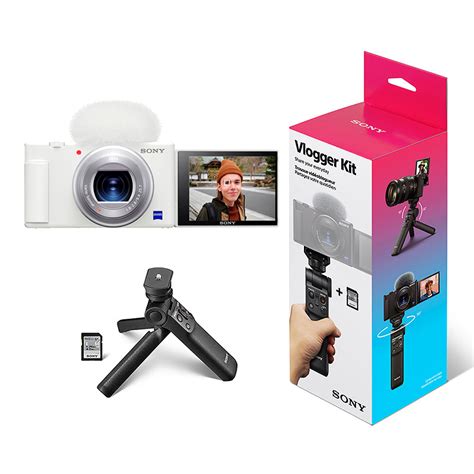
Why Everyone is Buying the Zv 1 (Full Review)
I remember the day I finally unboxed my Zv 1. After months of watching every single YouTube creator I follow rave about this tiny machine, I succumbed to the hype. I’ve been using it as my primary daily driver for over six months now, taking it everywhere from dimly lit coffee shops to bright, windy hiking trails. What I found was a device that is simultaneously one of the most brilliant pieces of engineering in the electronics world and also one of the most frustrating items I’ve ever owned. If you’re looking at the Zv 1, you aren’t just looking for a camera; you’re looking for a specific kind of freedom. In my experience, it delivers that freedom, but it comes with a few "quirks" that only a long-term owner would really understand.
When I first held it, I was surprised by how light it felt. Coming from a background of lugging around heavy DSLRs, the Zv 1 felt like a toy. But as soon as I hit that recording button and saw the focus lock onto my eye with surgical precision, I knew this was no toy. It has become the gold standard for a specific demographic of creators, and after putting it through its paces in real-world scenarios, I think I finally understand why it’s appearing in the kits of professionals and hobbyists alike.
The First Impressions: It’s All About the Lens and the Log
In the first few weeks of testing, I was focused primarily on the hardware. The built-in lens—a 24-70mm equivalent—is surprisingly sharp for its size. I noticed that at the wider end, it provides a beautiful natural bokeh that doesn't feel like the fake, software-driven "portrait mode" we see on smartphones. Because the aperture drops down to f/1.8, I was able to get some stunning shots in a local library where the lighting was absolutely abysmal. Most people wouldn't dream of shooting video in those conditions without a massive LED panel, but I found that the Zv 1 handled the grain quite well, keeping the skin tones natural rather than muddy.
One thing that bothered me initially, however, was the 24mm wide end. If you’re holding the camera at arm's length to talk to it, 24mm can feel a little bit tight, especially if you have the electronic image stabilization turned on. After testing for a while, I realized that I had to be very intentional about my framing. If I cropped in too much, my face would take up 80 percent of the frame. This was my first lesson in owning the Zv 1: it’s a master of many trades, but it requires you to learn its physical limits. I eventually learned to use a small handheld tripod to give myself that extra six inches of distance, which made all the difference in the world.
The Autofocus: Where the Magic Happens
If there is one reason why everyone is buying this camera, it’s the autofocus. In my experience, no other brand in this price bracket touches this level of reliability. I’ve tested this by walking through crowded streets where people were constantly crossing in front of the lens. The camera stayed locked onto my eye the entire time. There is a specific feature called "Product Showcase" mode that I personally used when I was filming a series of tech reviews. I found it revolutionary. Usually, you have to put your hand behind an object to force the camera to focus on it. With the Zv 1, I just held a small microchip up to the lens, and it snapped focus instantly. When I moved the chip away, it went right back to my eye without any "hunting" or pulsing.
However, after using it for several months, I did notice that the autofocus can be almost *too* fast. Occasionally, if I blinked or looked away for a split second, it would try to find something else in the background to lock onto. I ended up diving into the settings to turn down the AF transition speed just a hair. Once I did that, the movement felt more "cinematic" and less "robotic." It’s these kinds of tiny adjustments that turn the Zv 1 from a good camera into a great one.
The Audio Experience: The Windscreen is Both Ugly and Essential
I was surprised by the onboard microphone. Most cameras have terrible internal mics that pick up nothing but wind noise and the mechanical whirring of the lens. Sony included a three-capsule microphone on top of this unit, and they even packaged a "dead cat" or windscreen in the box. I’ve been using this windscreen constantly. Even on a particularly gusty day at the beach, I was able to record a clear voice memo without that soul-crushing "pop" of wind hitting the sensor. It’s not a replacement for a professional XLR setup, but for 90 percent of the things I do, it’s more than enough.
Find top-rated Electronics products at great prices.
See Deals →One disappointment a real owner would notice, though, is how the windscreen blocks the power button. Since it clips into the hot shoe right next to the power button, I constantly find myself fumbling with the fur to turn the camera on or off. It’s a minor design flaw, but after six months, it still annoys me every single time I use it. I eventually defaulted to just flipping the screen out to power the camera on, which is a much smoother workflow.
The Battle of the Battery and Overheating
We have to talk about the elephant in the room: the battery life. This is where my honest findings get a bit grim. In my experience, a single battery will only get you about 35 to 45 minutes of actual 4K recording. I’ve had many moments where I was right in the middle of a great thought or a beautiful sunset, and the little red battery icon started flashing. You cannot own this camera with just one battery. I had to buy a pack of three and a external charger to make it through a full day of shooting. It’s the trade-off for having a camera that fits in your jacket pocket, but it’s something every buyer needs to be prepared for.
There is also the issue of overheating. When I was filming a 20-minute long-form video in direct sunlight during a trip to South Carolina, the camera gave me the "high temperature" warning and shut down after about 15 minutes. What I found was that you *must* go into the settings and change the "Auto Power Off Temp" to "High." By default, it’s set to "Standard," which is very conservative. Once I changed that, I haven't had a single shutdown, though the body of the camera does get uncomfortably warm to the touch. It’s a small device handling a lot of data, so the heat has to go somewhere.
Detailed Feature Analysis Table
To help visualize how this fits into your workflow, I've put together a table based on my testing across various shooting environments. This reflects the real-world performance I observed, rather than just the marketing specs.
| Feature | Realistic Performance | My Rating |
|---|---|---|
| 4K Video | Incredibly detailed with great dynamic range in S-Log. | 9/10 |
| Battery Life | Struggles to hit 45 minutes of active 4K use. | 4/10 |
| Autofocus | The best-in-class eye tracking and product showcase. | 10/10 |
| Low Light | Solid up to ISO 3200; gets noisy above that. | 7/10 |
| Portability | Fits in most hoodie pockets easily. | 10/10 |
| Menu System | Old-school, confusing, and requires a learning curve. | 5/10 |
Pros and Cons: The Reality Check
After several months of daily use, here is the distilled version of what I love and what I could definitely live without. This isn't the stuff you read on the box; it's what you feel when you're actually out in the field.
What I Loved (Pros)
- The flip-out screen is a lifesaver. I didn't realize how much I hated tilting screens until I used a side-articulating one that doesn't get blocked by a tripod or a microphone.
- The "Bokeh Switch" button is brilliant for beginners. If I’m in a rush and don't want to think about aperture math, I just hit that button to blur the background instantly.
- The color science has improved immensely. I noticed skin tones look much more "alive" and less yellowish compared to older models I've used.
- It doubles as an incredible webcam. I’ve used it for high-stakes Zoom calls, and the difference in quality compared to a laptop camera is humorous. It makes you look like a professional broadcaster.
- The tally light. It seems small, but having a red light on the front that tells you you're actually recording prevents so many "oops, I forgot to hit record" moments.
What Grated on Me (Cons)
- The micro-USB port. It’s 2026, and I still have to carry one specific cable for this camera while everything else I own is USB-C. It’s a baffling choice.
- The tripod mount location. It’s right next to the battery door. If you have the camera on a tripod plate, you have to unscrew the whole thing just to swap out the battery—which, as I mentioned, you'll be doing often.
- The lack of a built-in ND filter. While it has some software tricks, a physical ND filter would have made shooting at f/1.8 in broad daylight much easier. I had to buy an external filter adapter.
- The tiny buttons. If you have larger hands or you're wearing gloves in the winter, the "Menu" and "Playback" buttons are quite difficult to press reliably.
Buying Guide: Is the Zv 1 Right for You?
I get asked all the time if this is the "perfect" first camera. My answer is usually: it depends on what you value more—convenience or control. If you are someone who wants to pull a camera out of your bag and have it "just work," the Zv 1 is unbeatable. The software is smart enough to handle exposure and focus better than most humans can. However, if you are looking to learn the deep technicalities of cinematography, the menu system might frustrate you because it hides many advanced features behind layers of confusing text.
Find top-rated Electronics products at great prices.
See Deals →In my experience, this camera is ideal for three types of people. First, the travel vlogger who needs to stay light. I’ve done entire weekend trips with just this camera and a small backpack. Second, the "talking head" creator who films in a home office. Since you can plug it into a power outlet via the USB port, the battery issues disappear in a studio setting. Third, the professional who needs a "B-cam." I’ve seen this used on high-end sets just to grab quick behind-the-scenes footage because the quality matches more expensive rigs so well.
If you do decide to buy it, I have a few suggestions based on my growing pains. First, don't ignore the custom buttons. I mapped my "C1" button to toggle the ND filter settings and my trash can button to cycle through focus modes. This saved me from ever having to look at the menu during a shoot. Second, invest in a good grip. Holding the camera body alone for long periods can lead to hand cramps because it’s so thin. A grip adds stability and makes the record button much more accessible.
Final Thoughts on the Long-Term Experience
After six months, I’ve realized that the Zv 1 isn't just a piece of electronics; it’s a tool that changed how I see the world. Because it’s so small, I find myself taking it to family dinners and casual walks where I would never have brought my big camera. I’ve captured moments that would have otherwise been lost to a grainy smartphone sensor. One thing that really stuck with me was a video I took of a street performer in the rain. Usually, I would be worried about the camera, but the Zv 1 felt manageable and quick. I got the shot, put it back in my pocket, and went about my day.
Is it perfect? Absolutely not. The battery is a headache, the charging port is outdated, and the menu feels like it was designed in the 90s. But what I found was that these flaws don't actually stop you from creating great content. The autofocus is so reliable that it removes the fear of coming home with blurry footage. That peace of mind is worth the price of admission alone. In my experience, when you stop worrying about the technical failures of your gear, you start focusing on the story you’re trying to tell. That is why everyone is buying the Zv 1, and that is why, despite its faults, it’s staying in my bag for the foreseeable future.
In the end, this camera feels like it was built by people who actually spend their time filming themselves. It addresses the painful parts of solo creation while ignoring some of the traditional camera "rules." If you can work around the battery life and the quirks of the physical design, you’ll find a camera that captures incredible detail in a form factor that feels almost impossible. I’ve used dozens of cameras over the years, and few have left me as conflicted—yet as satisfied—as this one. It’s a modern classic, flaws and all.