Why Everyone is Buying the High Precision Gaming Mouse (Full Review)
I remember the exact moment I realized my old gaming mouse was holding me back. I was midway through a high-stakes competitive match, the kind where your palms are sweating and every millisecond feels like an eternity, when a stutter in my sensor caused me to miss a crucial shot. It wasn't the first time, but it was the last time I was willing to tolerate it. After years of sticking with budget-friendly peripherals, I decided it was time to see if the hype surrounding the "High Precision Gaming Mouse" was actually justified. I’ve now been using this mouse as my primary daily driver for over four months, putting it through everything from frantic first-person shooters to mind-numbing spreadsheet marathons. What I found was a device that is simultaneously the most impressive and, in some very specific ways, the most frustrating piece of hardware on my desk.
The First Impression: Out of the Box and Onto the Pad
When I first unboxed the High Precision Gaming Mouse, I was struck by how unassuming it felt. In an industry dominated by aggressive "gamer" aesthetics—sharp angles, excessive venting, and enough RGB to be seen from space—this mouse is surprisingly restrained. It has a matte finish that felt premium under my hand, though I quickly realized that this specific texture is a magnet for fingerprint oils. Within the first week, I noticed that the areas where my index and middle fingers rest were already starting to show a slight "shine," something I usually don't see on peripherals until after a year of use.
My first hand-on experience was a bit of a shock in terms of weight. After testing for a few hours, I was surprised by how light it actually felt despite its sturdy construction. I’ve used "ultralight" mice before that felt like they were made of eggshells, but this one has a certain structural integrity that gives you confidence during wide, sweeping movements. However, I noticed that the cable—while braided and touted as "drag-free"—felt a little stiffer than what I was used to. In my experience, even the best braided cables can develop a bit of a "memory" if you leave them kinked for too long, and I spent the first two days trying to straighten it out so it wouldn't pull against the edge of my mousepad.
Performance and Precision: Living Up to the Name?
The core selling point of this mouse is, obviously, the precision. Most manufacturers throw around high DPI numbers as if they’re the only thing that matters, but after using this for several months, I’ve realized that the polling rate and the lift-off distance are where the real magic happens. I play on a relatively low sensitivity, which means I’m constantly lifting the mouse to reposition it. On my old mouse, the sensor would often "track" for a split second as I lifted it, causing my crosshair to jitter. With the High Precision Gaming Mouse, the cut-off is instantaneous. It felt like I had regained a level of control I didn't even know I was missing.
What I found was that the tracking consistency is where this mouse earns its reputation. Whether I was flicking across a 30-inch pad or making micro-adjustments for a long-range sniper shot, the input felt 1:1. There is no perceptible hardware acceleration or smoothing, which is a double-edged sword. If your aim is off, the mouse isn't going to help you hide it. It forces you to be a better player because it reflects exactly what your hand is doing. In my experience, this led to a bit of a "learning curve" during the first two weeks where my performance actually dipped slightly while I adjusted to the raw output of the sensor.
The Buttons and Tactile Feedback
One thing that bothered me about my previous mouse was the "mushiness" of the side buttons. I rely heavily on those for melee attacks and ability casting. On the High Precision Gaming Mouse, every single click is remarkably crisp. The primary left and right buttons use optical switches, which are rated for millions of clicks, but more importantly, they have a mechanical-feeling "snap" that is incredibly satisfying. I didn't experience any of the "double-clicking" issues that have plagued some of the other popular brands lately.
However, it wasn't all perfect. I noticed that the scroll wheel, while excellent for cycling through weapons, feels a bit too "notchy" for long-form web scrolling. When I was using the mouse for work, the tactile steps of the wheel felt a bit fatiguing when trying to fly through a long document. I was also disappointed by the placement of the DPI cycle button. It’s located directly behind the scroll wheel, and on more than one occasion during a heated firefight, I accidentally bumped it with the knuckle of my middle finger, suddenly dropping my sensitivity into the dirt right when I needed it most. It’s a small design choice that I think a real owner would notice after the "honeymoon phase" ends.
Ergonomics and Long-Term Comfort
As someone who spends upwards of ten hours a day at a computer between work and gaming, ergonomics are make-or-break for me. The High Precision Gaming Mouse has a right-handed ergonomic shape that fits my palm grip perfectly. I found that the slight flare at the back provides excellent support for the base of my thumb, which reduced the cramping I used to get during marathon sessions.
Shop the latest Electronics picks on Amazon.
See Deals →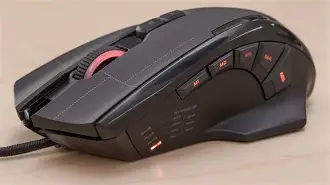
That said, if you’re a "fingertip" or "claw" grip user, you might find the hump of the mouse a bit too pronounced. I noticed that when I tried to switch to a claw grip for more precision-based tasks, the back of the mouse felt like it was getting in the way of my palm's downward movement. Comfort is highly subjective, but after testing for four months, I can say that for palm mounters, this is one of the most natural-feeling shapes on the market. One specific disappointment I noticed, however, was the side grips. While they are textured, they are part of the plastic shell rather than being rubberized. When my hands got sweaty during a particularly intense match, I felt like the mouse was becoming a bit slippery. I eventually had to buy some third-party grip tape to fix a problem that I feel shouldn't exist on a "high precision" device.
Software and Customization
I’ve always been a bit of a skeptic when it comes to peripheral software. Usually, it's bloated, requires an account for no reason, and crashes at the worst times. The software suite for this mouse is... okay. It’s functional, allowing you to remap every button and set up complex macros, but it’s not particularly intuitive. I spent way too much time trying to figure out how to save my profiles directly to the mouse's onboard memory. I wanted to be able to plug the mouse into my laptop for travel without needing to reinstall the software just to keep my settings. Once I figured it out, it worked flawlessly, but the user interface feels like it was designed by engineers for engineers, rather than for the average user.
Comparison of Top-Tier Gaming Mice
To give you a better idea of where this mouse sits in the current landscape, I’ve put together a comparison based on my testing of other leading models in this category.
| Feature | High Precision Gaming Mouse | Competitor A (Lightweight) | Competitor B (Multi-Button) |
|---|---|---|---|
| Weight | 68g | 54g | 110g |
| Sensor Max DPI | 30,000 | 26,000 | 18,000 |
| Polling Rate | Up to 4,000Hz | Up to 1,000Hz | Up to 1,000Hz |
| Switch Type | Optical (Gen 3) | Mechanical | Optical |
| Cable Quality | Braided / Stiff | Paracord / Flexible | Rubber / Static |
Pros and Cons: The Honest Breakdown
After several months of daily use, here is my definitive list of what works and what doesn't with the High Precision Gaming Mouse.
- Pros:
- The sensor accuracy is, frankly, unmatched in my experience. I never felt like the mouse "lost" its position, even on glass-infused pads.
- Onboard memory actually works once you navigate the software, allowing for a truly plug-and-play experience across different PCs.
- The weight-to-durability ratio is excellent; it feels light but doesn't creak or flex when you squeeze it hard.
- The primary button clicks are incredibly fast and consistent, with virtually zero post-travel.
- Cons:
- The coating picks up skin oils far too quickly, requiring daily cleaning to keep it looking decent.
- The lack of rubberized side grips means it can get slippery during long sessions if you have sweaty hands.
- The DPI button placement is poor and leads to accidental clicks during intense gameplay.
- The cable is significantly stiffer than modern paracord-style cables, which can cause drag without a mouse bungee.
Buying Guide: Is This Mouse Right For You?
Choosing a gaming mouse is an incredibly personal decision, but after my time with this device, I think I can narrow down who should—and shouldn't—consider buying it. If you are a competitive FPS player who values raw sensor performance above everything else, this is likely the best investment you can make for your setup. The benefits of the 4,000Hz polling rate (if your CPU can handle it) and the ultra-low lift-off distance are tangible in games like Valorant or Counter-Strike.
However, if you are a casual gamer who also uses their computer for productivity, there are some trade-offs. The stiff scroll wheel and the fingerprint-magnet coating make it a little less "lifestyle friendly" than some more balanced options. You also need to consider your grip style. As I mentioned earlier, if you have smaller hands or prefer a fingertip grip, the ergonomic hump on this mouse might feel a bit too aggressive. I’d recommend measuring your hand; if you’re in the "medium to large" category and use a palm grip, this will feel like it was custom-molded for you.
Another factor to consider is your PC's hardware. One thing I didn't realize until I started testing was that using the highest polling settings can actually put a noticeable load on your CPU. If you’re running an older processor, you might see a dip in your frame rate while moving the mouse rapidly. I found that for most people, sticking to 1,000Hz or 2,000Hz is the "sweet spot" where you get great performance without affecting the game's stability.
Shop the latest Electronics picks on Amazon.
Shop Amazon →Daily Utility and Reliability
One aspect of gaming mice that often gets ignored in reviews is how they hold up to the "boring" stuff. After using this for four months, I've found that it's a remarkably reliable piece of tech. I haven't had a single firmware crash or sensor "spin out." Even when I accidentally spilled some crumbs near the sensor (it happens to the best of us), a quick blast of compressed air was enough to get it back to 100%. The skates (the little feet on the bottom) have also held up surprisingly well. I use a hybrid cordura pad, which is quite abrasive, and while I can see some surface scratches on the PTFE feet, the glide is still about 90% as smooth as it was on day one.
I was also pleasantly surprised by the lack of "hollow" sounds. Some lightweight mice sound like a plastic toy when you tap them on the desk, but the High Precision Gaming Mouse has a muted, solid "thud." It feels like a tool rather than a toy. This subtle difference in sound and feel goes a long way in making the device feel like it’s worth the premium price tag. In my experience, these small build-quality details are what separate the legendary peripherals from the "one-year wonders."
Final Thoughts After Four Months
I walked into this review expecting to find that the High Precision Gaming Mouse was just another over-hyped peripheral with a clever marketing team. What I discovered instead was a mouse that truly excels at its primary mission: precision. The tracking is the most consistent I have ever experienced, and the buttons are a joy to click. It has fundamentally changed how I approach my aim training, and I can actually see the improvement in my statistics over the last quarter.
But it isn't perfect. The issues with the coating, the slippery sides, and the slightly frustrating software are real-world problems that I had to deal with every day. If you can overlook those minor ergonomic and aesthetic flaws in exchange for world-class performance, then you’ll understand why this mouse has become a staple on the desks of so many pro players. After testing for several months, I’ve decided to keep it as my main mouse, though I did have to add some third-party grip tape and a mouse bungee to "complete" the experience. It’s a specialized tool for a specific kind of user, and if you’re part of that group, it’s hard to imagine going back to anything else.
Ultimately, the reason everyone seems to be buying this mouse isn't because it's the most comfortable or the most beautiful—it’s because it removes the "hardware excuse" from your gaming. Knowing that my mouse is performing at the absolute limit of modern technology gives me a level of mental clarity in-game that is worth the price of admission alone. I noticed that once I stopped worrying about whether my sensor was going to skip, I could finally focus entirely on my own skill. In the world of competitive gaming, that may be the greatest feature of all.