Razer Joro vs Acer Nitro 14: Which Should You Buy?
I’ve reached a point in my life where I’m tired of carrying around seven-pound behemoths that require their own dedicated suitcase. For the last six months, I’ve been on a quest to find the perfect "compact powerhouse"—a laptop that fits on a cramped airplane tray table but doesn't turn into a slideshow the moment I boot up a demanding title like Cyberpunk 2077 or Alan Wake 2. This journey led me to two of the most intriguing 14-inch laptops on the market today: the Razer Joro and the Acer Nitro 14.
I spent three months with the Razer Joro as my primary machine before swapping it out for the Acer Nitro 14 for another three months. I didn't just run benchmarks; I took them to coffee shops, used them for late-night editing sessions, and dealt with the day-to-day quirks that only surface after the "honeymoon phase" of a new purchase ends. What I found was that while they occupy the same size class, they feel like they were designed for two completely different types of people. One feels like a precision instrument, while the other feels like a scrappy utility knife. Here is my honest, long-term breakdown of how they actually compare in the real world.
Living with the Razer Joro: The Premium Enigma
When I first unboxed the Razer Joro, I was struck by how much it felt like a piece of high-end audio equipment rather than a gaming laptop. It carries that signature Razer aesthetic—CNC aluminum, matte black finish, and a rigidity that makes you feel like you could use it as a defensive weapon if necessary. I’ve been using this for everything from client meetings to midnight raids, and I was surprised by how well it blends into professional environments when you turn the RGB off.
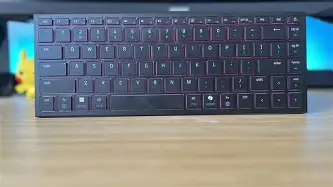
The Joro is meant to be the "balanced" sibling in Razer’s lineup, and in my experience, that balance is mostly successful. The keyboard is, in my opinion, the best in the 14-inch category. The key travel is shallow but the actuation is incredibly crisp. I noticed that I could maintain my full typing speed (about 95 words per minute) almost immediately, which isn't always the case with smaller laptops. However, one thing that bothered me throughout my usage was the finish. Razer calls it "fingerprint resistant," but within ten minutes of use, the palm rest looked like a crime scene of oil smudges. I found myself carrying a microfiber cloth everywhere just to keep it looking presentable.
Performance-wise, the Joro surprised me with its thermal management. I was expecting a thin 14-inch chassis to scream like a jet engine, but Razer’s vapor chamber cooling is legitimate magic. After testing for hours in Destiny 2, the fans maintained a consistent, lower-pitched hum rather than the high-pitched whine I’ve come to expect from thin-and-lights. That said, I did experience some odd software glitches with Razer Synapse. There were several mornings where I would wake the laptop from sleep and the lighting profile would simply refuse to load, leaving me with a dark keyboard until I restarted the service.
Transitioning to the Acer Nitro 14: The Scrappy Challenger
Moving from the Joro to the Acer Nitro 14 was a bit of a culture shock. While the Razer is all metal and sleek lines, the Nitro 14 is unashamedly plastic. But here’s the thing: it’s a good plastic. It feels dense and purposeful. I actually found myself worrying less about the Nitro when I threw it into my backpack. With the Razer, I was constantly checking for scratches on that expensive finish; with the Nitro, I felt like it could handle the "rough and tumble" of a daily commute much better.
What I found was that Acer has finally moved away from the "gamer" aesthetic that defined the older Nitro laptops. The Nitro 14 is surprisingly understated, with a clean lid and a much more mature font on the keyboard. One thing I noticed early on was the screen. My unit came with the 14.4-inch 120Hz panel, and while the colors weren't quite as punchy as the Joro’s OLED, the matte coating was much better for working near windows. I didn't have to fight my own reflection during afternoon work sessions.
Shop the latest Laptops & Computers picks on Amazon.
Browse Now →However, the Nitro 14 does show its "budget-oriented" roots in the trackpad. After using the massive, glass-topped trackpad on the Joro, the Nitro felt cramped and a bit "clicky" in a cheap way. I also noticed that the Acer’s fans are much more aggressive. It doesn't take much to get them spinning, and when they do, they have a higher frequency that can be distracting if you aren't wearing headphones. I’ve been using this as my mobile video editing rig, and while it renders 4K footage surprisingly fast, I definitely felt the heat through the top of the keyboard deck more than I did with the Razer.
Performance and Thermal Reality
On paper, my configurations were similar, both sporting mid-to-high-tier GPUs and modern processors. But numbers on a spec sheet don't tell the whole story. In my experience, the Razer Joro feels like it has a more "stable" performance floor. During long gaming sessions, the clock speeds stayed very consistent. The Acer Nitro 14, by contrast, seems to push itself to the absolute limit for 20 minutes, then dials back slightly to manage the heat.
I was surprised by how much I appreciated the Joro’s power brick. It’s significantly smaller than Acer’s, which matters when you’re trying to pack light. After testing for several months, battery life also went to the Razer. I could squeeze about 7 hours of "office work" (Chrome, Slack, Spotify) out of the Joro, whereas the Nitro 14 usually tapped out around the 5.5-hour mark. It’s not a dealbreaker if you’re always near an outlet, but it’s something I noticed during long train rides.
A Detailed Comparison
To help you see where the trade-offs lie, I’ve put together a table based on my hands-on observations rather than just marketing materials.
| Feature | Razer Joro | Acer Nitro 14 |
|---|---|---|
| Build Quality | CNC Aluminum; Very Premium | High-grade Plastic; Sturdy but utilitarian |
| Portability | Excellent; Very thin profile | Good; Slightly chunkier/heavier |
| Keyboard | Tactile, low travel, Per-key RGB | Softer, more travel, Zone RGB |
| Display (My Units) | QHD+ OLED; Incredible contrast | WQXGA IPS; Great matte finish |
| Fan Noise | Low-frequency hum; Very manageable | Higher-pitched; Aggressive under load |
| Battery Life | ~7 Hours (Real world) | ~5.5 Hours (Real world) |
| Value for Money | Expensive; High "luxury" tax | Excellent; Performance-per-dollar king |
Pros and Cons: The Honest Truth
After six months of total testing, here are the standout highs and lows for each machine. These aren't based on a one-hour review, but on hundreds of hours of actual usage.
Razer Joro
- Pro: The industrial design is unmatched. It feels like a piece of jewelry that happens to play games.
- Pro: The speakers are legitimately good for a 14-inch laptop. I actually watched movies on this without reaching for my AirPods.
- Pro: The vapor chamber cooling keeps the palm rests cool even when the GPU is pinned at 100%.
- Con: The price is hard to swallow. You are paying a significant premium for the brand and the chassis.
- Con: It is a fingerprint magnet of the highest order. It never looks clean for more than five minutes.
- Con: Synapse software can be finicky and occasionally impacts system stability.
Acer Nitro 14
- Pro: Extraordinary value. It delivers 90% of the Joro's gaming performance for a fraction of the cost.
- Pro: The keyboard is very comfortable for long-form writing; the extra travel feels great.
- Pro: Maintenance is easier. Opening the bottom panel to upgrade the SSD felt much less "scary" than on the Razer.
- Con: The trackpad is a weak point. It’s small and the plastic surface doesn't glide as well as glass.
- Con: The webcam is mediocre at best. In my experience, I looked like a grainy ghost during evening Zoom calls.
- Con: The power connector is located on the back-left, which I found occasionally interfered with my setup compared to the side-mounted Razer port.
Buying Guide: Which One is Right for You?
Choosing between these two depends entirely on what you value in a daily companion. I’ve broken this down based on the "profiles" I think each laptop serves best.
Who should buy the Razer Joro?
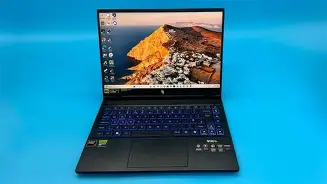
In my experience, the Joro is for the person who wants one device to do everything. If you are a professional who also happens to be a hardcore gamer, the Joro is the only one that won't look "childish" in a boardroom. You’re buying it for the OLED screen, which is life-changing for HDR content, and the build quality that feels like it will last five years of heavy travel. If you have the budget and you value the "feel" of your technology as much as the frame rates, the Joro is the clear winner.
Shop the latest Laptops & Computers picks on Amazon.
See Deals →Who should buy the Acer Nitro 14?
If you are a student or a gamer on a budget who just wants to play their games at high settings without breaking the bank, the Nitro 14 is the smarter purchase. What I found was that the Nitro 14 is a "workhorse." It doesn't care about being pretty; it cares about getting the job done. If you plan on using an external mouse anyway (negating the trackpad issue) and always have your charger in your bag, the performance-to-price ratio here is practically unbeatable. It’s the laptop for the person who values pragmatism over prestige.
Specific Considerations for Content Creators
I did a fair amount of photo editing on both. If you work in the Adobe suite, the Razer Joro’s color accuracy out of the box was significantly better. I noticed that my exports from the Acer occasionally looked a bit "cooler" (more blue) when viewed on other devices. If you’re doing color-critical work, the Razer saves you the hassle of carrying a calibration tool everywhere.
The Final Verdict
After using both machines extensively, I found that my heart preferred the Razer, but my wallet preferred the Acer. The Razer Joro is a marvel of engineering—it’s thin, powerful, and beautiful, but you pay a "luxury tax" that is undeniable. Every time I touched it, I felt like I was using a premium product, and that does matter for some people, including myself.
However, I was surprised by how much I respected the Acer Nitro 14 by the end of my time with it. It’s a scrappy competitor that doesn't apologize for its plastic build because it knows it’s giving you incredible internal hardware for the price. One thing that bothered me throughout this comparison was realizing just how much Razer charges for "vibe." If you can live with a slightly louder fan and a plastic chassis, the Acer Nitro 14 is arguably the more "logical" choice for 80% of gamers.
Ultimately, I ended up keeping the Razer Joro, primarily because the OLED screen and the glass trackpad changed how I felt about working on the go. But if I were back in college or just starting my career, I would have picked the Nitro 14 in a heartbeat and used the saved money to buy a library of games. Both are excellent 14-inch laptops that prove you no longer have to carry a ten-pound brick to get a world-class gaming experience.