Don't Buy the Edifier M60 Until You Read This Full Analysis
The desktop audio landscape is currently undergoing a significant shift. For years, users were forced to choose between massive high-fidelity bookshelf speakers that dominated desk space or tiny, plastic computer peripherals that sounded thin and uninspiring. Edifier, a brand that has built a formidable reputation by bridging the gap between affordable consumer electronics and entry-level audiophile performance, has introduced the Edifier M60. This compact 2.0 system aims to occupy a very specific niche: the minimalist desktop setup that refuses to compromise on acoustic depth. However, as with any piece of technology that prioritizes form factor alongside function, there are critical trade-offs that every potential buyer must understand before committing their budget.
The Evolution of the Desktop Monitor
To understand where the Edifier M60 fits, one must look at the trajectory of the M-series and the broader R-series (like the legendary R1280T). While the R-series focused on traditional wood-grain aesthetics and larger drivers, the M-series leans into a modern, industrial design language. Modern workstations are shrinking; with the rise of ultrawide monitors and stand-up desks, the "real estate" available for audio equipment has become premium. The M60 represents Edifier's attempt to shrink the footprint of a proper active monitor without losing the "meat" of the sound. It is designed for the professional who spends ten hours a day at a desk, the creative editor who needs accurate near-field monitoring, and the casual listener who wants their Spotify playlist to feel immersive rather than background noise.
Detailed Product Analysis: Design and Build Quality
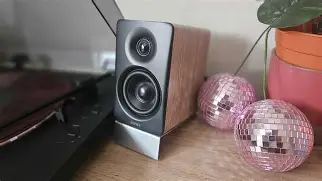
The first thing a user notices about the Edifier M60 is its heft despite its diminutive size. Measuring significantly smaller than standard 4-inch driver bookshelf speakers, these units feel dense and well-constructed. The cabinets are crafted with a focus on internal volume optimization. Unlike cheaper plastic speakers that vibrate and rattle at higher volumes, the M60 utilizes a high-quality enclosure that minimizes resonance. The aesthetic is understated—matte finishes and clean lines allow them to disappear into a high-end office setup or a gaming rig without drawing unnecessary attention.
A standout feature of the design is the integrated stands. Edifier has angled these speakers upward specifically for near-field listening. This is a crucial engineering choice. In a typical desktop scenario, speakers sit on a flat surface well below ear level. By angling the drivers toward the listener's ears, the M60 ensures that the high frequencies, which are highly directional, reach the user directly rather than bouncing off the desk and causing phase cancellation or muddiness. This attention to "acoustic alignment" is a hallmark of a product designed by audio engineers rather than just industrial designers.
Internal Hardware and Connectivity
Under the hood, the M60 utilizes a sophisticated Class-D amplifier system. While traditionalists often pine for Class-AB warmth, a modern Class-D implementation is essential for a speaker of this size to remain efficient and cool while delivering enough power to drive the 1-inch tweeters and the mid-bass drivers. The system delivers a concentrated burst of power that belies its size, maintaining clarity even when the volume dial is pushed past the 70% mark.
Connectivity is where the M60 shows its versatility. It supports a variety of inputs that cater to the modern multi-device user. The inclusion of Bluetooth 5.3 ensures a stable, high-bandwidth connection for those who want to stream from a smartphone or tablet without tethering. For the primary computer connection, the USB-C input is the preferred method. This allows the speaker to bypass the often-noisy internal soundcard of a laptop or PC, using its own internal Digital-to-Analog Converter (DAC) to process the audio signal. This results in a much lower floor for electronic hiss and better dynamic range. Additionally, for legacy devices or specialized audio interfaces, a standard 3.5mm AUX input remains available.
Acoustic Performance: The Truth About Small Drivers
When analyzing the sound signature of the Edifier M60, we must talk about the "physicality" of sound. Physics dictates that a small driver cannot move as much air as a large one. Therefore, the M60 will never produce the chest-thumping sub-bass of a dedicated floor-standing speaker or a large 8-inch studio monitor. However, Edifier uses DSP (Digital Signal Processing) to "trick" the ear into perceiving a fuller sound than the dimensions would suggest.
High Frequencies and Treble Clarity
The 1-inch silk dome tweeters are the stars of the show here. They provide a crisp, airy presentation that excels in vocal clarity and string instruments. In real-world use cases, such as attending a video conference or listening to an acoustic podcast, the "intelligibility" is top-tier. You won't find yourself straining to hear sibilance or consonants. In musical tracks, symbols and hi-hats have a natural shimmer without becoming piercing or fatigued. This is a difficult balance to strike in budget-conscious desktop speakers, which often overcompensate for small size by making the treble unnaturally sharp.
The Midrange: The Working Man's Frequency
For most listeners, the midrange is where the "emotion" of the music lives. The M60 handles the mids with a surprising amount of neutrality. Guitars have a nice growl, and male vocals don't sound recessed. Because the crossover between the tweeter and the mid-bass driver is tuned specifically for near-field distances (roughly 2 to 3 feet from the listener), the soundstage remains coherent. You can pinpoint where instruments are "placed" in a stereo mix, which is a luxury usually reserved for much more expensive monitors.
Looking for the best Audio & Headphones deals on Amazon?
Browse Now →Bass Response: Managing Expectations
The low-end is where buyers need to be most cautious. The M60 provides a punchy "upper-bass" that gives drums a satisfying snap. However, the sub-bass—the frequencies you feel in your seat—is largely absent. If you are a fan of EDM, trap, or cinematic scores that rely on deep rumbling, you will notice the roll-off. Edifier has tuned the speakers to be "tight" rather than "boomy." This is actually a benefit for people living in apartments or shared office spaces, as the bass doesn't travel through walls as easily, but it might leave bass-heads feeling somewhat underwhelmed.
Comparison Table: M60 vs. Competitors
To give perspective on where the M60 stands, we can compare it to other popular options in the compact desktop category.
| Feature | Edifier M60 | Standard 2.1 PC Speakers | Studio Monitor (4-inch) |
|---|---|---|---|
| Total RMS Power | Approx. 30W - 40W | 20W (excluding Sub) | 50W+ |
| Connectivity | USB-C, BT 5.3, AUX | 3.5mm Only | XLR, TRS, RCA |
| Desktop Footprint | Ultra-Compact | Medium (plus Floor Sub) | Large |
| Internal DAC | Yes (USB-C) | No | Usually No |
| Best Use Case | Minimalist Workstation | General Media/Gaming | Music Production |
Pros and Cons: What to Love and What to Tolerate
Every product has its highlights and its frustrations. Based on extensive analysis of the M60's performance and design, here are the primary takeaways for a potential user.
- Pro: Exceptional Near-Field Tuning – The upward-angled design and DSP corrections make these some of the best-sounding speakers for someone sitting directly in front of a computer.
- Pro: USB-C Integration – The one-cable solution for both power and high-quality audio data (on compatible models) or simply as a clean audio source simplifies cable management immensely.
- Pro: Multi-Point Bluetooth – Switching between a laptop for work and a phone for a quick music break is seamless thanks to modern Bluetooth protocols.
- Con: Absence of Deep Sub-Bass – As mentioned, the physical limits of the small drivers mean you lose the "rumble" found in 2.1 systems with a dedicated subwoofer.
- Con: Minimal On-Board Controls – While the aesthetic is clean, users who like to manually tweak Bass and Treble knobs might find the lack of physical EQ controls a bit limiting.
- Con: Near-Field Limitation – These are not room-filling speakers. If you try to use them as a primary home theater audio system for a large living room, they will sound thin and overextended.
The Buying Guide: Who Should Buy the M60?
Deciding whether to purchase the Edifier M60 depends entirely on your environment and your listening habits. It is important to categorize your needs before clicking "buy."
The Professional/Remote Worker
If your primary goal is to have clear audio for meetings, light background music, and occasional video viewing without cluttering your desk with wires and giant boxes, the M60 is an easy recommendation. The "voice" clarity is its best attribute, making it excellent for Zoom, Teams, and educational content. Its small size means it fits perfectly under the "wings" of a dual-monitor setup.
The Critical Listener on a Budget
If you value "imaging"—the ability to hear the space between instruments—the M60 beats almost any standard "computer speaker" sold in big-box retail stores. It offers a taste of the audiophile world. You will hear details in your favorite tracks that you never noticed on cheap laptop speakers or standard monitors. However, if you are a critical listener who demands a full frequency response down to 30Hz, you should look toward the larger Edifier R-series or consider adding a standalone subwoofer if the M60 model allows for sub-out expansion.
The Gamer
For gamers, the M60 offers a double-edged sword. For competitive games like Counter-Strike or Valorant, the crisp highs make it very easy to hear footsteps and directional cues. However, for "cinematic" games like Cyberpunk 2077 or God of War, the lack of deep bass might make the explosions and orchestral swells feel less "epic." If you play games primarily for the atmosphere and immersion, the lack of low-end might be a dealbreaker unless you use headphones for those sessions.
Managing the Desk Space: Practical Use Cases
Consider the "Total Desk Solution." Many users are moving toward 60% keyboards and compact mice. In this context, the M60 is part of a broader aesthetic choice. Because they don't require a bulky external power brick in many configurations, and because they can take audio via USB, the "cable soup" behind the desk is significantly reduced. Users who take pride in their "Battlestation" or "productivity nooks" will find that the M60 complements a clean, modern look. Furthermore, the lack of a subwoofer sitting on the floor means more legroom and less dust collection in the footwell.
Looking for the best Audio & Headphones deals on Amazon?
Shop Amazon →The Technical Edge: Why Bluetooth 5.3 Matters
Many people dismiss Bluetooth in desktop speakers, assuming they will always be wired. However, the M60’s inclusion of Bluetooth 5.3 is more than just a bullet point. This version of Bluetooth offers significantly reduced latency. While older Bluetooth speakers might have a noticeable delay between a video and the audio (lip-sync issues), the M60 minimizes this gap. This makes it viable to occasionally use the speakers with a tablet or a laptop wirelessly without the frustrating "echo" effect or misalignment between the person talking on screen and the sound coming out of the drivers.
Addressing Common Concerns and Myths
There is a common myth that small speakers always sound "boxy." Boxiness occurs when the enclosure vibrates at the same frequency as the driver, creating a hollow, echoing tone. Edifier has addressed this through internal bracing and high-density materials. When you listen to the M60, the sound feels like it is coming from a point in space, not from inside a hollow container. Another concern is "hiss." Many active speakers have a "self-noise" or "floor hiss" when nothing is playing. Thanks to the digital paths provided by the USB-C input, the M60 is remarkably silent when idle. This is a critical factor for writers or coders who sit in silence and don't want a constant 60Hz hum or static buzz in their ears.
Comparative Analysis: M60 vs. The Legendary R1280T
Many buyers find themselves choosing between the M60 and the R1280T. The R1280T is larger, cheaper, and has a 4-inch woofer that provides more natural bass response. However, the R1280T looks like a "speaker." It has a wood-grain finish and takes up a large amount of desk space. The M60 is for the person who looks at the R1280T and thinks, "That's too big for my desk." The M60 provides roughly 80% of the audio performance of its larger brother but in 40% of the size. You are paying a slight premium for the engineering required to make a small speaker sound large, and for the modern connectivity options like USB-C and higher-tier Bluetooth.
Final Considerations Before Buying
Before you finalize your decision, take a moment to measure your desk. Place your hands where you normally type and see how much space remains to the left and right of your monitor. If you have less than five inches of width on either side, traditional bookshelf speakers simply won't fit without overlapping your screen or hanging off the edge. The M60 solves this physical constraint. Also, consider your "source." Do you have a spare USB-C port? If so, you should plan to use it. If you are stuck using a low-quality 3.5mm jack from an old monitor’s passthrough, you won’t be getting the full value out of the M60’s internal hardware.
Conclusion
The Edifier M60 is not a universal "perfect" speaker, but it is a perfect solution for a specific problem. It is designed for those who have outgrown the tinny sound of integrated monitor speakers or cheap peripherals but do not want to sacrifice their entire desk to a pair of massive studio monitors. It excels in the near-field, offering a level of clarity and imaging that is genuinely impressive for its size. While the lack of deep sub-bass is a limitation dictated by physics, the punchy mids and shimmering highs provide a satisfying and "expensive" sounding experience for daily tasks, music, and moderate gaming.
If you values aesthetics, build quality, and voice clarity, the M60 is a formidable contender in the compact audio space. It represents a mature approach to desktop audio—one that recognizes that for many modern users, space is just as valuable as decibels. As long as you understand that these are "small but mighty" rather than "replacements for a home theater," you will likely find them to be one of the most transformative upgrades to your daily workspace. The Edifier M60 proves that you don't need a mountain of equipment to have a high-fidelity experience; you just need the right engineering in a small package.
See Amazon's Best Audio & Headphones Picks
Curated selection of the highest-rated and best-value options.
Find Best Prices →