A8H Oled First Look: Unboxing and Impressions
The Sony A8H OLED represents a critical juncture in the evolution of premium television technology. Positioned as a flagship-tier display that prioritizes cinematic accuracy and acoustic innovation, it targets a specific demographic: the home theater enthusiast who values the "creator’s intent" above raw peak brightness. In an era where many manufacturers are locked in a race for higher nits, Sony has consistently doubled down on processing power and color science. This first look explores the immediate experience of introducing the A8H into a living space, from the physical act of unboxing to the initial visual impact of its self-emissive pixels.
Unboxing a modern OLED is often a high-stakes endeavor. Due to the nature of the technology, the panel is incredibly thin—often measuring only a few millimeters at its edge—which requires a specific logistical approach to prevent flexing or damage. The A8H packaging is designed with this fragility in mind, utilizing a "lift-off" box design that allows the user to remove the outer sleeve without needing to lift the heavy panel over a cardboard lip. For buyers, the first impression is one of sleek, industrial precision. The bezel is virtually nonexistent, replaced by a flush metal edge that ensures the focus remains entirely on the glass. This design philosophy, which Sony identifies as "One Slate," is intended to minimize distractions and allow the display to blend seamlessly into the architectural environment of a modern home.
The Build Quality and Physical Setup
One of the standout features noted during the initial assembly of the A8H is the versatility of its stand. Sony has implemented a dual-position stand system that addresses a common pain point for modern TV owners: the soundbar dilemma. In its standard "low-profile" setting, the TV sits nearly flush with the surface of the media console, creating a floating effect. However, the legs can be inverted to raise the panel by roughly two inches. This provides sufficient clearance for a dedicated soundbar without obstructing the bottom edge of the screen or the infrared sensor. It is a practical engineering choice that reflects a deep understanding of how consumers actually set up their entertainment centers.
The rear of the unit is equally well-considered. While the majority of the panel is razor-thin, the lower half houses the "brain" of the TV—the X1 Ultimate processor—along with the power supply and connectivity ports. Sony has opted for a textured plastic finish with integrated cable management channels. These channels allow cables to be routed through the feet of the stand, ensuring a clean, wireless look from the front. Even at this early stage, before the power is even toggled, the A8H exudes a sense of premium craftsmanship that differentiates it from the more plastic-heavy designs found in mid-range LED-LCD sets.
Picture Quality: The OLED Advantage
Upon powering the A8H for the first time, the inherent benefits of OLED technology are immediately apparent. Unlike traditional TVs that rely on a backlight, every one of the 8 million pixels in an OLED panel is self-lit. This allows for "true black"—a state where pixels are completely switched off. In a darkened room, the letterbox bars on a 2.35:1 aspect ratio film simply disappear into the shadows of the room, creating an immersive experience that no local-dimming LCD can perfectly replicate.
However, the A8H is not just about the hardware; it is about the processing. Sony’s X1 Ultimate chip is widely regarded as the industry benchmark for image upscaling and motion handling. Even when viewing standard definition or 1080p content from legacy sources, the processor uses object-based super resolution to analyze individual elements on the screen—such as faces, foliage, or textiles—and enhances their detail without introducing the "plastic" look often associated with aggressive sharpening. For the enthusiast, this means that older film favorites gain a new lease on life, appearing sharper and more vibrant without losing their cinematic grain.
Color reproduction on the A8H is handled by the Pixel Contrast Booster. While OLEDs naturally have high contrast, Sony uses this technology to maximize the dynamic range in high-brightness areas. During unboxing tests with HDR10 and Dolby Vision content, the highlights—such as the glint of sun on water or the glow of a neon sign—pop with a level of intensity that belies the panel's modest peak brightness numbers. The colors are not oversaturated or "neon"; instead, they feel grounded in reality, following the D65 white point standards used in professional mastering studios.
Shop the latest TVs & Home Theater picks on Amazon.
Browse Now →Acoustic Surface Audio: A Unique Sonic Profile
Audio is frequently the weakest link in thin-panel televisions, yet the A8H attempts to solve this through a radical rethink of speaker technology. Instead of traditional downward-firing drivers that bounce sound off a table, Sony utilizes actuators placed behind the OLED panel itself. These actuators vibrate the glass to produce sound, effectively making the entire screen the speaker. This technology, known as Acoustic Surface Audio, ensures that dialogue appears to originate directly from the mouth of the actor on screen, rather than from a speaker hidden in the chin of the TV.
Initial listening sessions suggest a surprisingly robust soundstage. The A8H includes two integrated subwoofers at the rear to handle low-end frequencies, preventing the "tinny" sound common in flat-panel TVs. While it will not replace a dedicated 5.1 or 7.1 surround sound system, it is perhaps the only television on the market that offers an acceptable out-of-the-box audio experience for those who prefer not to clutter their room with external speakers. The spatial accuracy is particularly impressive during gaming or action sequences, where objects moving across the screen are accompanied by sound that follows their trajectory.
The Smart Interface and User Experience
The A8H runs on the Android TV platform, which provides access to a massive library of applications including all major streaming services. What stands out in this iteration is the speed. Navigating through menus, switching between HDMI inputs, and launching heavy apps like Netflix or YouTube is instantaneous. Sony has also refined the "Quick Settings" menu, allowing users to adjust picture modes, brightness, and sleep timers without exiting the content they are currently watching.
Another feature that buyers in the high-end segment care about is integration with the wider smart home ecosystem. The A8H supports Google Assistant and Amazon Alexa, along with Apple AirPlay 2 and HomeKit. For a user unboxing this in a modern home, the ability to mirror a phone screen or control the TV via voice commands adds a layer of convenience that rounds out the premium experience. The remote control, while not as minimal as some competitors, feels substantial in the hand and features a refined metal faceplate that matches the TV’s aesthetics.
Pros and Cons
- Incredible Black Levels: The ability to turn off pixels entirely provides infinite contrast and perfect performance in dark rooms.
- Class-Leading Motion: Sony’s XMotion Clarity for OLED ensures that sports and action movies remain fluid without the "soap opera effect."
- Acoustic Surface Audio: The innovative sound-from-screen technology creates an immersive audio-visual sync rarely found in televisions.
- Versatile Stand Design: The two-way stand is a simple but brilliant solution for those using soundbars.
- Peak Brightness: Like all OLEDs, the A8H cannot reach the searing brightness levels of high-end LED TVs, making it less ideal for rooms with direct sunlight.
- Gaming Features: While the response time is excellent, the lack of certain HDMI 2.1 features like Variable Refresh Rate (VRR) might give hardcore gamers pause.
Technical Specification Comparison
To understand where the A8H sits in the market, it is helpful to compare its core attributes against standard premium expectations.
| Feature | Sony A8H OLED | Typical Premium LED-LCD |
|---|---|---|
| Display Tech | OLED (Self-Emissive) | VA/IPS with Local Dimming |
| Contrast Ratio | Infinite | 5,000:1 to 50,000:1 |
| Image Processor | X1 Ultimate | Niche/Proprietary |
| Audio Technology | Acoustic Surface (Screen Vibrates) | Bottom or Rear Firing Drivers |
| Viewing Angles | Perfect (No color shift) | Limited (Color washes out at angles) |
| Thickness | Ultra-thin (at top) | Uniformly Thicker |
Buying Guide: Is the A8H Right for You?
Choosing a television in this price bracket requires a clear understanding of your viewing environment and habits. The Sony A8H is an "enthusiast" display, meaning it excels in controlled lighting conditions. If your primary use case is watching 4K Blurays, streaming high-quality series, or playing immersive single-player games in a dim living room, the A8H is arguably the best tool for the job. The accuracy of the "Cinema" and "Custom" modes is so high that most users will not need to hire a professional calibrator to get a studio-quality image.
However, if you are looking for a TV to put in a bright sunroom with large windows opposite the screen, the reflective nature of the glass panel and the limited peak brightness of OLED might be a challenge. In those scenarios, a high-brightness LED-LCD might be more practical. Additionally, while the A8H is a fantastic gaming TV due to its near-instantaneous pixel response time—which eliminates motion blur—it lacks the HDMI 2.1 bandwidth for 4K at 120Hz. For most cinema lovers, this is a non-issue, but for competitive gamers with the latest consoles, it is a factor to consider.
Looking for the best TVs & Home Theater deals on Amazon?
Shop Amazon →Lastly, consider the longevity. Contemporary OLEDs have significant safeguards against "burn-in," including pixel shifting and logo dimming. Sony’s processing is particularly conservative here, gently dimming static elements to protect the panel. For the average user watching a variety of content, the risk is negligible, but it is worth noting for those who plan to leave a single news channel running for twelve hours a day.
The Evolution of the Living Room Centerpiece
The A8H represents a shift in how we perceive the television. It is no longer just a box that receives a signal; it is a sophisticated piece of optical and acoustic engineering. During the first look and unboxing process, it becomes clear that Sony is aiming for a "distraction-free" experience. By hiding the speakers, slimming the bezels, and focusing on the purity of the black levels, they have created a window into another world. The initial impressions are overwhelmingly positive for anyone who values the artistry of cinematography. When the lights go down and the first frames of a well-shot film appear on the A8H, the technology fades away, leaving only the story.
This level of immersion is the ultimate goal of any home theater component. While it requires a certain level of investment, the tactile quality of the hardware and the visible superiority of the X1 Ultimate processing provide a clear justification for its place in the premium market. The A8H does not try to be everything for everyone; it does not try to be the brightest or the loudest. Instead, it tries to be the most accurate, and in these first impressions, it succeeds remarkably well.
Final Thoughts on the First Look
Setting up the Sony A8H is a reminder of how far display technology has come in the last decade. We have moved from bulky CCFL-backlit LCDs to panels that are as thin as a smartphone, yet capable of producing colors and deep blacks that were once the exclusive domain of high-end plasma displays. The unboxing experience is smooth, reflecting the premium nature of the product, and the initial performance out of the box is stunning. Even without deep menu diving, the "Greatness" of the OLED panel shines through. It is a confident, mature product from a company that has spent decades perfecting the relationship between the camera and the screen. For the buyer who wants the cinema experience delivered to their sofa with zero compromise on image integrity, the A8H makes a powerful first impression that is likely to last through years of viewing.
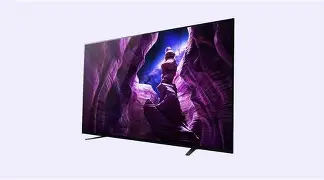
As we spend more time with the unit, exploring its deep-calibration settings and HDR tone mapping capabilities, the subtle strengths of the X1 Ultimate processor will likely become even more apparent. But for now, as the screen sits dark and perfectly reflective on the media console, it stands as a testament to modern industrial design and the persistent pursuit of visual perfection.